3CR 855am

(03) 9419 8377 | email 3cr | 21 Smith Street Fitzroy Melbourne Australia


Home   Contact   Site Map

Renegade Economists

Image Wednesday 5.30 - 6 pm

Economics influences every aspect of our lives. It also influences our abilities to be activists and understand why businessmen do what they do.

Did an 'invisible hand' tell them they have to make money at all costs? What are the primary motivations to these behaviours? Is it just greed or is there something systematically askew?

It's time for the Renegade Economists to delve into this murky world and help clarify these factors. Solutions are a key to this innovative program. Alice & Karl will keep the show as diverse as the game of life.

Presented by Karl Fitzgerald and Alice Bleby.

Email the presenters.

Go to Earthsharing Australia to find out more about the ideas behind Renegade Economists.


Two CRAM Articles from November 2007 below>


Renegade Economists to the Rescue!

Economics – it underpins our lives yet so few of us are savvy to the nuts and bolts of economic theories and practices. This all changed for 3CR listeners, however, with the launch in early September of Renegade Economists.

Every Wednesday afternoon Karl Fitzgerald and Alice Belby delve into the murky world of economics and help clarify what makes the modern world tick. Solutions are a key to this innovative program and Alice and Karl spread their net wide looking at the whole paradigm of economics and the impact on the environment, poverty, housing and …well really on just about everything.

Their aim is to educate and empower activists so that activists can be well versed when they encounter economic theories. Karl finds that even well respected progressive activists can still be under the sway of so called accepted ‘economist’s truths’.

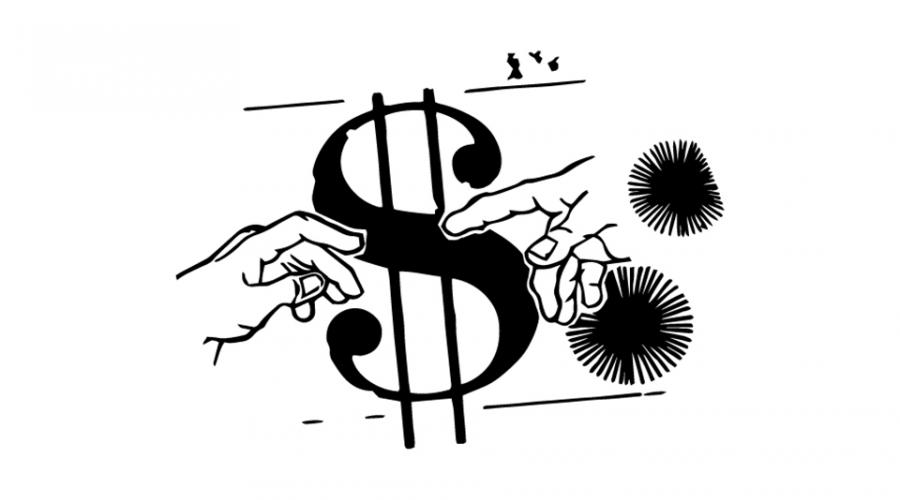
The program features various program segments, all of which are focused on demystification, education and the suggestion of alternatives. Segments include examining the historical basis of economics outlooks; updates on economic think-tanks and campaigns; an ‘economics for dummies’ glossary; a focus on the specifics of economics and related topics such as climate change; and ‘Lobbyocracy’ – an expose of the hypocrisy of democracy where $1=1 vote.

Karl has had a long association with 3CR, going aback to when he presented a late night program Itch to Scratch, playing hip hop and dance music and entertaining himself by sampling Bob Hawke speeches over dance music. Alice is new to 3CR and from the beginning has felt welcomed and part of a community.

Both Karl and Alice are associated with Prosper, an NGO which describes itself as ‘radical centre’ and has the aim of explaining fundamental economic laws and enabling both businesses and organisations to transform themselves by looking at big picture economics. Alice is part of Earthsharing, the youth branch of Prosper and is the current President of the UN Youth Association of Victoria. With a background in studying politics and history, economics is a new field of interest for her while Karl has formally studied economics.

Renegade Economists is, according to the charming hosts, destined to cause controversy as they attack many of the economic theories behind the various ‘isms’. Their proposed theory of ‘geonomics’, a land-based economics system, is a radical departure from standard economics. While economists worldwide accept the economic theory of a tax on resources not labour as a preferable method, mainstream media has not given such theories space. 3CR is a natural home for such a program as Renegade Economists. Karl believes that his and Alice’s progressive economic theories are ethically aligned to 3CR and that the 3CR audience is a perfect one for vibrant and challenging analyses.

So tune in on Wednesdays at 5.30pm and be illuminated, challenged and empowered by a new understanding of how our world could be run on different wheels and to a different tune!

By Bree McKilligan


Economics as Modern Warfare

How many 3CR listeners are frustrated by the market’s dominance? How often do we hear that the free-market can save the day? That the market can employ us all? That free trade will solve the problems of poverty?

Economics is known as the dismal science because it is boring enough to make most people switch off. It’s working isn’t it? And look at what they get away with!

Dare we mention Iraq? Wars are a tactic in the global economy to gain ownership and dominance of natural resources. And the profit-making opportunities of war are hardly motivations for peace.

One of the biggest economic problems facing our world today is poverty. We constantly hear that it’s about debt and have superstars running around the world calling for it to be wiped. But even if the debt was wiped, what then?

“Over the past 50 years rich nations have given $1 trillion in aid to poor ones. This stupendous sum has failed spectacularly to improve the lot of its intended beneficiaries,” reported The Economist (June 26, 1999:22).

Former UN Human Rights Commissioner Mary Robinson states, “Count up the results of 50 years of human rights mechanisms, 30 years of multi-billion dollar development programmes and endless high level rhetoric and the general impact is quite under-whelming…this is a failure of implementation on a scale that shames us all.” (Geoffrey Robertson, Crimes against Humanity, 1999:32).

At this crucial point it’s time we stepped back and looked at the universal economic laws undermining such admirable efforts.

Ask yourself where do you spend most of your weekly budget? In what industries does Macquarie Bank make most of its money? Which Australian giant made as much profit as the latest Federal Government surplus?

Well, housing tops our weekly budgets, Macquarie specialises in investments where resource-based monopoly profits are assured and BHP made $16.7 billion dollars mining a country that is still technically at war with its Indigenous people, as occupation without Treaty equals war under international law.

We aren’t all born onto the planet as equals. Some are seen as having greater ‘rights’ because they have the ability to make huge profits from resources and pollute the planet at the same time. Many of these ‘rights’ come from inside deals between old buddies. Governments support such actions as if the profiteers actually produced these natural resources!

Opportunity can be enhanced by giving citizens a mechanism to share in the profits gained through monopoly ownership of resources. If the price of oil goes from $30 to $60 we must ask – what did the oil magnate do to sell the goods for this higher price? Did they double oil’s usefulness? No. They have is the monopolist’s privilege over precious resources.

The same situation exists with home ownership. Over 70% of a mortgage is consumed by the cost of land. We constantly see land and housing prices booming, with a 10.2% increase in just the June quarter. Such growth outstrips labour’s hard fought 3% annual wage gains.

Speculation in land is driving up prices all over the planet. Any community with culture or a spectacular view (ie Vanuatu) is just a button click away from rampant property speculation, forcing working classes to pay higher rents and thus reducing their freedoms further. This is the end game in modern warfare’s subtle manoeuvres to keep us pegged to the system.

All of these examples reflect what is technically known as ‘unearned income’. Appreciations in pricing occurred through no extra effort by the owner of this natural resource. A more equitable way to collect public finance and ensure greater equity is to share the natural appreciation of resources.

This can be achieved through a Resource Rental system. By charging a decent royalty fee on oil, coal, land or any other resource, we can assure a public share of the increased value of a resource. This allows us to cull some of the 56 taxes that strangle small business and penalise hard work. The Green Tax Shift begins – off productive work and onto resources. Such a shift sees resources become more costly for corporations, encouraging them to use our precious resources sparingly.

Once the shift begins, resource users are encouraged to incorporate efficient methods into the productive capacity. The profit motive will alter their behaviour as if they truly cared for the environment. Corporations as diverse as Interface Carpets and Grocon are showing leadership incorporating ‘green economics’ to benefit their bottom line.

However the dominance of vested interests is limiting such change.

The ugly duckling of the economy - the tax system - encourages speculation, particularly in resources, rather than hard work. This enhances the unearned income that such profits deliver. This is the big game that is at the vanguard of neo-liberalism. In the meantime, the rest of us are battling for higher wages through the old wage system. The level playing field has tilted drastically.

A just society of the future must ensure an economic democracy where the natural wealth of the planet is shared evenly.

By Karl Fitzgerald

Co-presenter of Renegade Economists

Karl works at Earthsharing.